When is a pip deck not really a pip deck? In this video, I argue that many popular decks we hear people mention as pip decks are really examples of minimalist symbolic RWS imagery.
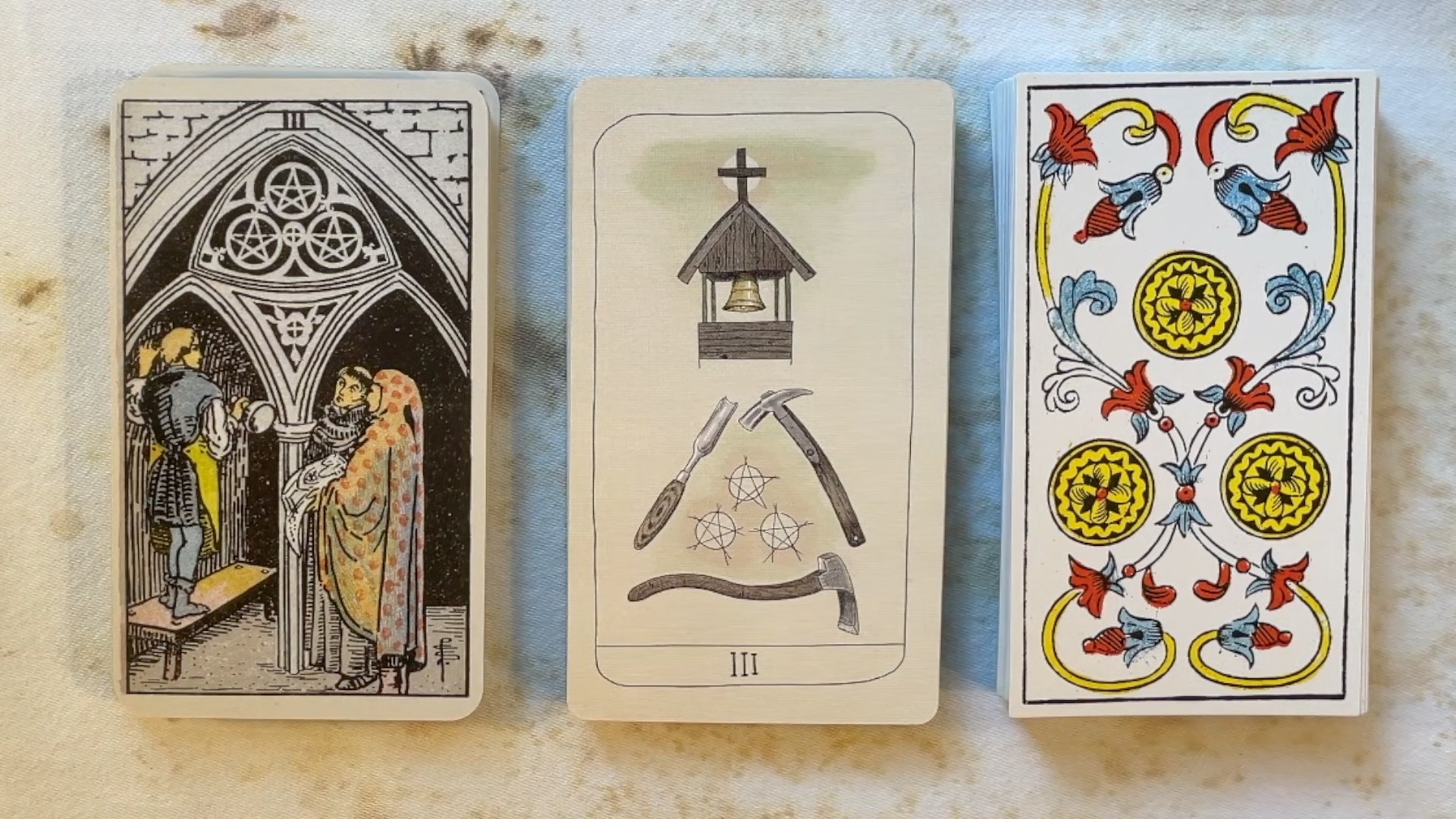
In what I’m calling a flashcard deck, there may not be people; the scenes might be slightly different or there may not be much of a setting at all, but the arrangement of the implements and the included symbols and decoration are intended to remind the reader of the engravings by Pamela Coleman Smith. And when we see that, it’s easy to feel stuck in those interpretations (5 of Cups = sadness; 10 of Swords = ruin).
In this video I’m exploring some decks that reference Smith’s images more and less directly in the 1-10 cards, and how that makes the deck operate as a whole. Does it “work”? Do the face cards and pips feel like two completely different decks? Are the pip cards consistent in their references or do they vary card by card, or suit by suit? How easy or difficult is it to ignore the RWS ‘hints’ in a particular deck?
I’m very curious to hear from you about which decks you have that do this, to any degree, and how that impacts their readability for you. Does having these references feel supportive, constrictive? Does not having such strong allusion help or does it feel groundless and vague? Does it depend on your mood, the question, or other factors? Please let me know what you think.
I’m indebted to Nancy of Hidden Magic Tarot for re-inspiring me to try to make a video about this topic. I had thought of several different approaches but wasn’t sure any of them would work, then I found her Decks with Non-Standard Pips: Varying levels of “pipitude” and realized this was a great start to the conversation I’d been trying to have, but from a different angle. I also greatly appreciate Nancy’s exploration of the pips number-by-number and will have more to say about that in my upcoming numerology series. Check out Nancy’s Part 1 on the Aces and Part 2 on the 2’s in her Deepen Your Tarot Readings series.
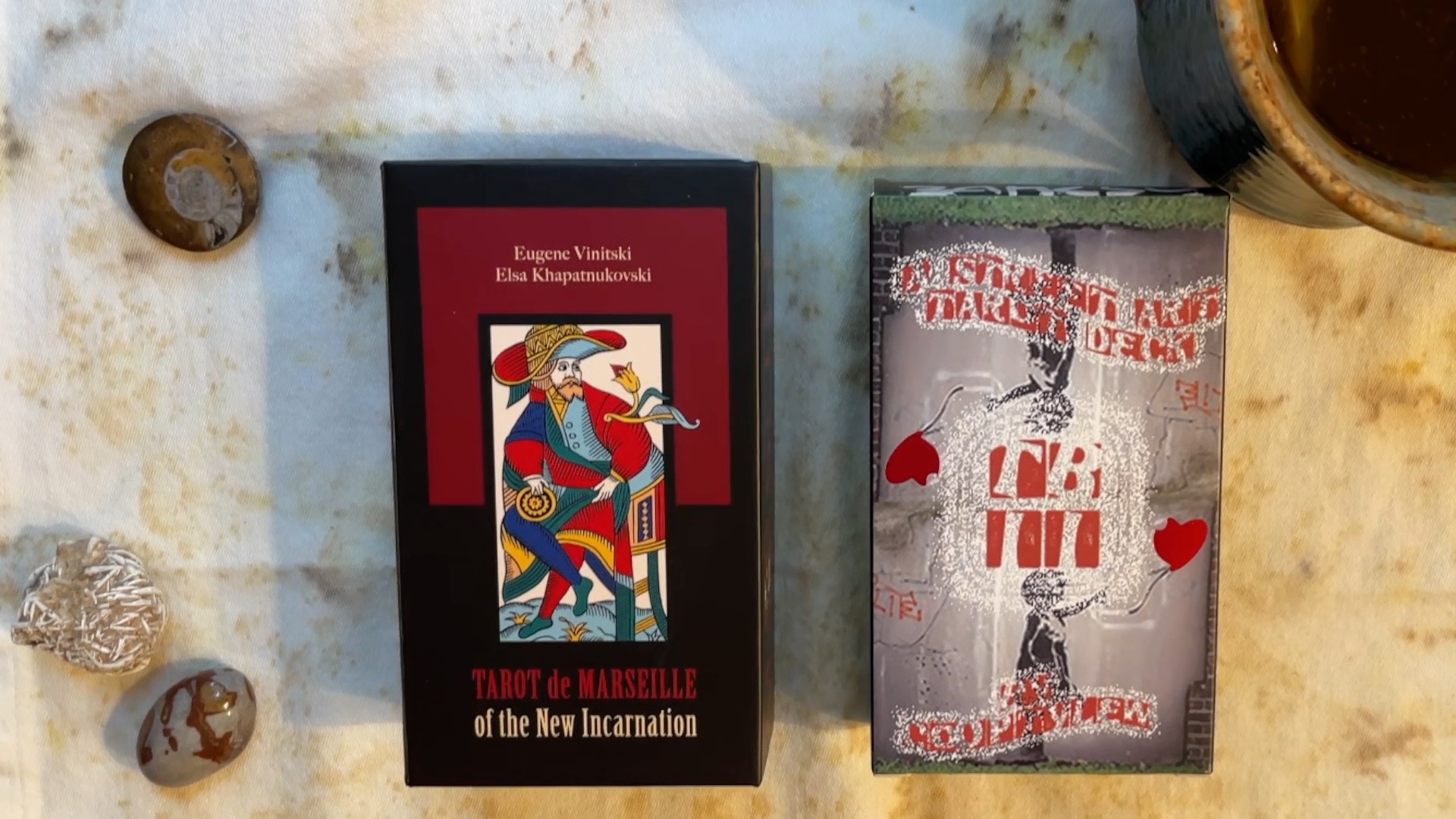
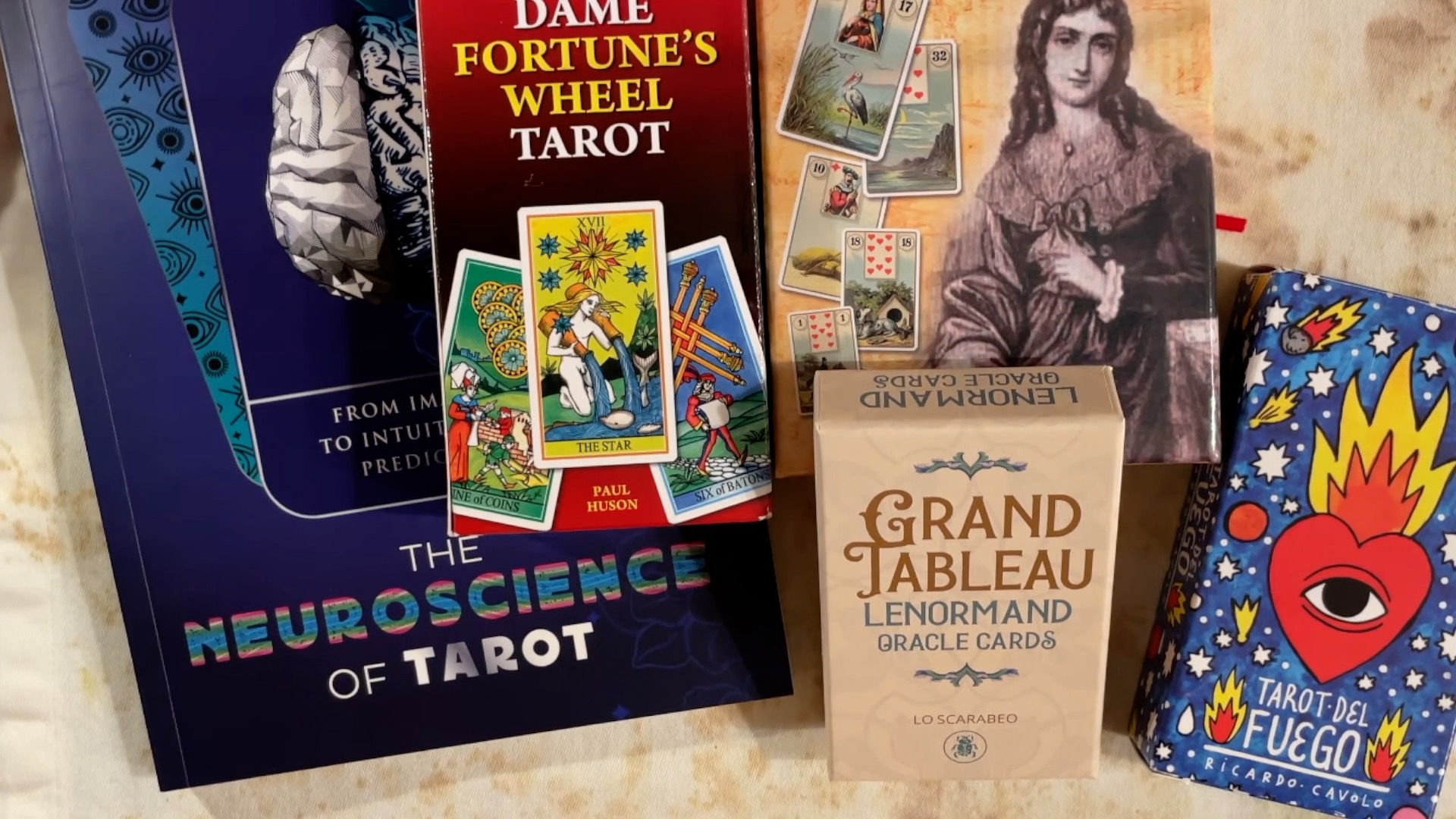
Decks shown in this video:
The Rider-Wait Tarot as The 1909 Art Restoration Deck Tarot Cards, illustrated by Pamela Coleman Smith under direction from Arthur Edward Waite, 1909. First published by William Rider & Son in London. © 2020 Art restoration by C in London. All rights reserved. Available on-demand via Drive-Thru Cards.
The Tarot Francois Gassmann, 1840, Geneva, Switzerland. Restored and reproduced by Yves Renaud, Tarot de Marseilles Heritage, YEAR.
Fifth Spirit Tarot, Charlie Claire Burgess, 1st ed. self-published (shown); 2nd ed. Hay House, 2022
Pagan Otherworlds Tarot, UUSI, 2016.
The Gay Marseille, Charlie Claire Burgess, 2024. Available from the artist.
The Yarn Tarot, Katie Ponder, Sixth & Spring Books, 2021
Antique Anatomy Tarot, Claire Goodchild, Abrams, 2019
Modern Goth Tarot, illustrated by Natalie Foss, Skittledog Press, 2024
Inspired Soul Tarot, Juli Rose, self-published 2020. Available on-demand at Make Playing Cards and The Gamecrafter.
Trionfi Della Luna, Testo Italiano edition, 2016