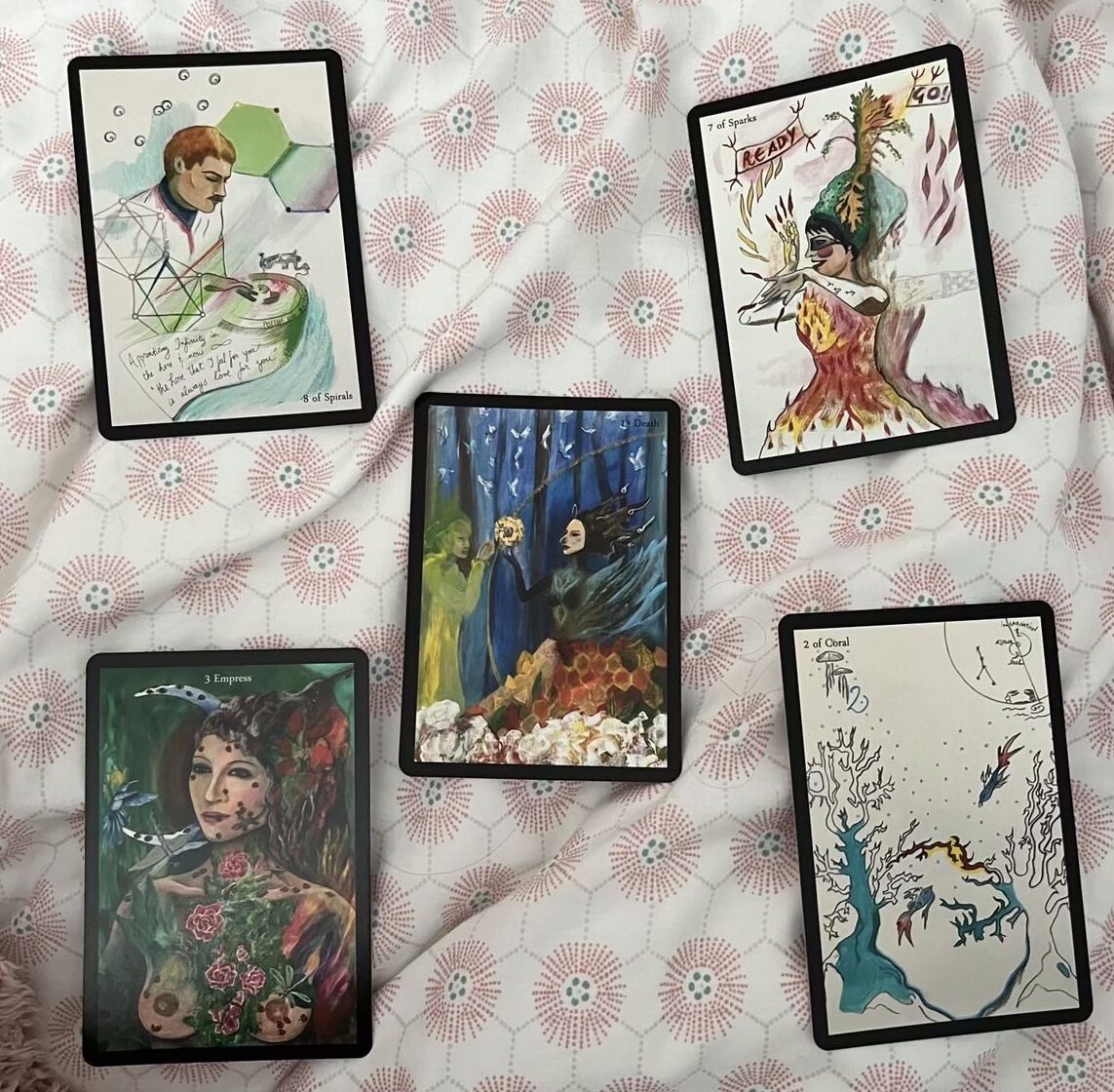

We’ve all been there: thinking about joining a new group, and not sure whether it will be a good fit. Are the people honest? Does the organization have a healthy culture? Whether it’s a potential employer, discussion group, volunteer organization, religious gathering, or bowling club, it can be helpful to investigate the connection between the actions, the talk, and the internal attitudes that are present before attending your interview or first meeting.
This spread can also be used to investigate individuals: the blind date, the incoming boss, the new squeeze your friend is bringing to dinner. Of course, as with any divinatory reading, I would not base all of my impressions and information on a tarot reading about someone. It’s important to be open to people and allow them a chance to show you who they are. But it can be helpful to have a frame of reference and advance notice of any potential blind spots in oneself or hidden truths (positive or negative) in the other person.
The layout of this spread is not particularly important, as long as you know which position is which. I like to pull 3 cards per position for better context, but you could use a single card, 2 cards, or even more if you like.
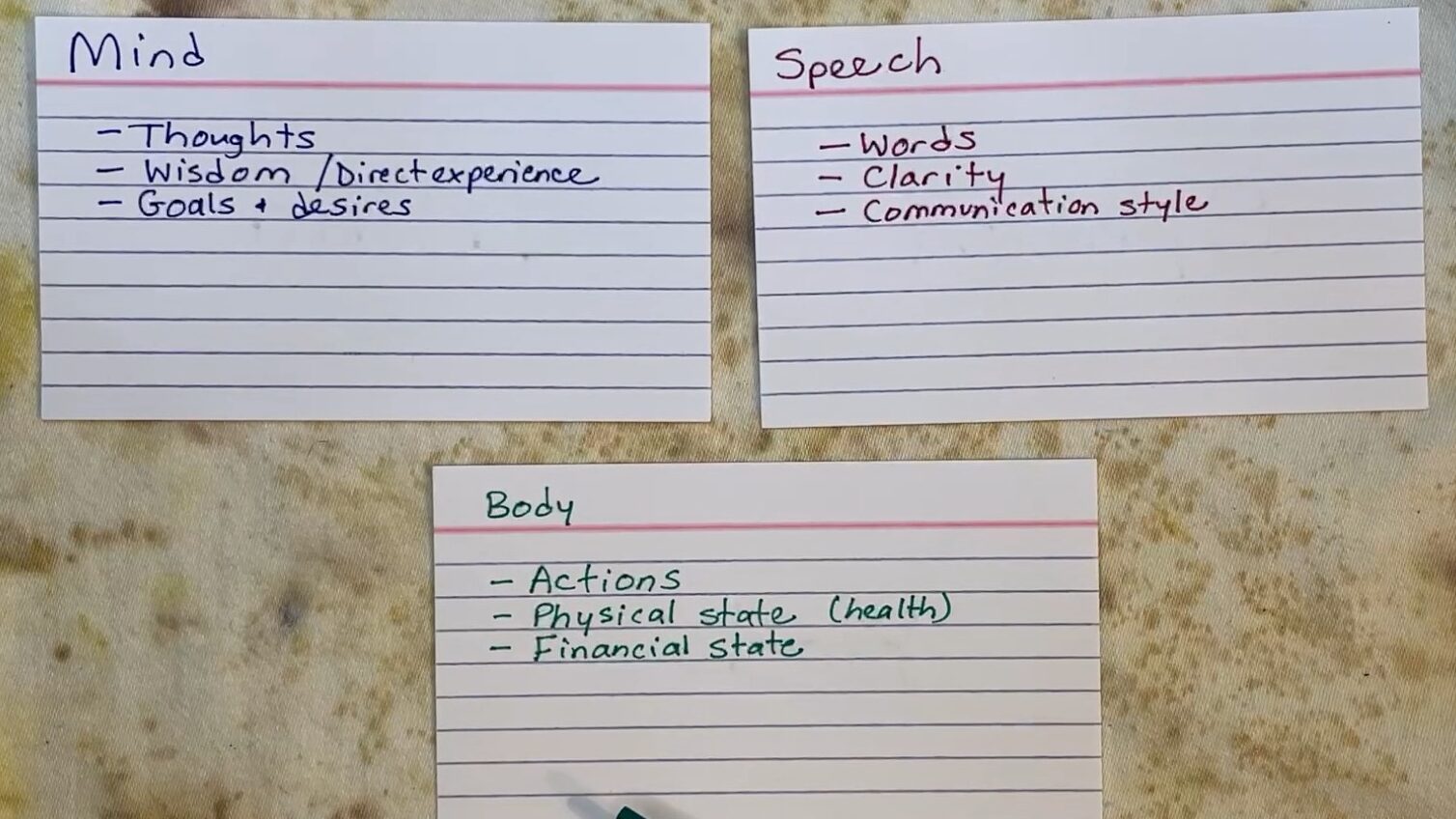
Body: The actions and physical nature of the organization or person.
For organizations, this position can indicate how they put their values into play. What results have they had over time? How do they use resources (budget, people) wisely and sustainably? Is the organization financially stable? Is their facility safe and in good repair?
For an individual, this position can address questions like: What types of activities do they enjoy? Are they generous? Are they financially responsible? Do they visit the doctor regularly for checkups and practice good hygiene? Are they interested in fashion, fancy cars, or other status markers?
Speech: The communication, written and spoken, of the organization or person.
On the institutional level, this can touch on the organization’s stated mission, values, and how they position themselves among similar organizations or promote themselves to potential clients, donors, or volunteers. How do they speak about their mission and the people they serve? How do they speak about any competitors or others in a similar societal role? Are they cooperatively oriented or competitive?
In a more personal reading, this position may indicate someone’s preferred communication style or mode (blunt vs. verbose, or prefers text vs. voice calls, for example). It can also indicate the topics that they like to talk about, and how skilled they are at conversation.
Mind: The unspoken culture, or internal thoughts and emotions.
This position can be the most difficult one to read, and potentially the most revealing. I genuinely believe that most organizations and people show what they’re thinking by their speech and actions, but that can be difficult to pick up on at times. It is interesting to consider any contrast between this position and the other two, to figure out if the organization or individual does and says what they think, or if there is a disconnect between their values and actions.
For organizations, look to this position to gain insight on what their senior leadership truly values and the wisdom and direct experience they hold. Do those values align with how they present themselves to the world? Do they put their money where their mouth is, through the actions they take and the impact they have on their community or customer base? Is their planning and attention cohesive or are they chasing too many threads in different directions? Are they stuck in outdated mindsets, or open and flexible to respond to new situations and markets? Do the people at this organization value a casual environment or are they more conservative?
For people, this position can indicate what they’re hiding, but that’s not to say that hiding something from a stranger (the querent in this case) is bad. We don’t want to brain-dump our entire life story in the job interview or on the first date; that would be weird. So I like to give people the benefit the doubt, but also see what else might be going on under the surface. I use this position to look at their personal values in relation to the external situation and what they’re saying. Do they really want to work at this company / love dogs / have a knack for baking? What are their motivations for this interaction you’re about to have together? What can you do or say to help put them at ease or make them feel more comfortable?
I hope you’ll try this spread the next time you’re going into a situation with a group or individual you don’t know well, and that you’ll share what you learn from it.